

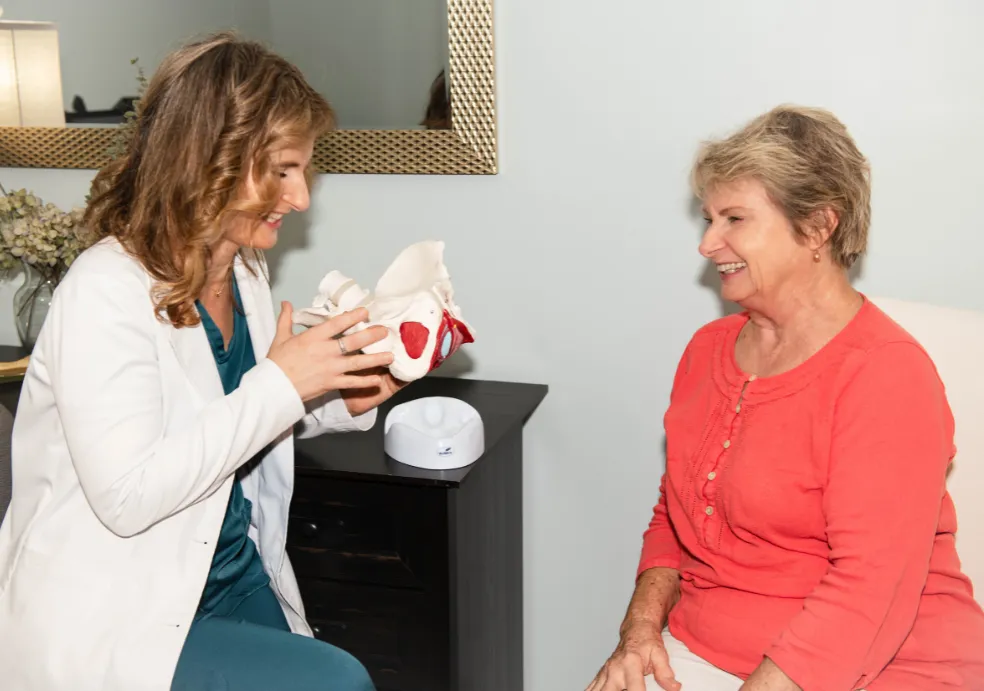
You’ve heard about kegels. You’ve probably heard jokes about moms not being able to sneeze without leaking. But most new moms leave the hospital with almost no information about the group of muscles that held their baby for nine months — and what those muscles need now.
Your pelvic floor did extraordinary work during pregnancy and birth. And whether you delivered vaginally or by C-section, those muscles need intentional support to heal well. This post is your starting point — no jargon, no shame, just the information you deserved to have from day one.
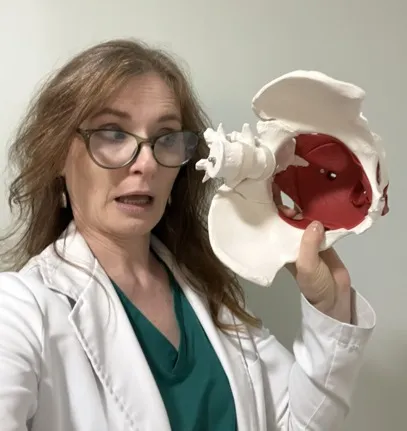
Who knew? Understanding the pelvic floor starts with seeing it. Look at the bowl-shaped muscle group that supports your pelvic organs and spine!
So what exactly is the pelvic floor?
Think of the pelvic floor as a hammock, or sling, of muscles that stretches from your tailbone to your pubic bone, spanning the base of your pelvis. Cup your hand; that’s about the size of this hard-working system! This group of muscles works together to:
• Support your bladder, bowel, and uterus
• Control when you urinate, have a bowel movement, or pass gas
• Stabilize your pelvis and lower spine as part of your core system
• Play a role in sexual function and sensation
• Work with your diaphragm and deep abdominals to manage internal pressure
It’s not one muscle — it’s a team. And like any team, things go sideways when some members are overworked, underworked, or injured.
💡 Good to know:
The pelvic floor is part of your “core” — but it’s not the same as your abs. A six-pack tells you nothing about pelvic floor health. Many women who have very strong visible cores still have significant pelvic floor dysfunction after childbirth.
What happens to the pelvic floor during pregnancy and birth?
A lot. Here’s the honest version:
During pregnancy
For nine months, your pelvic floor muscles carry the increasing weight of your growing baby, uterus, placenta, and amniotic fluid. That sustained load — combined with hormonal changes that soften connective tissue throughout your body — stretches and fatigues these muscles significantly. By the time you give birth, your pelvic floor has already been through a lot.
During a vaginal birth
The pelvic floor stretches dramatically to allow your baby to pass through — research suggests the levator ani muscle (the primary pelvic floor muscle) can stretch up to three times its normal length during delivery. Tearing, episiotomies, prolonged pushing, vacuum or forceps assistance, and a big baby can all add additional stress or injury to the tissue.
During a C-section
Many moms who deliver by cesarean assume their pelvic floor was “spared.” In reality, your pelvic floor still carried a baby. You also have a surgical scar spanning SEVEN LAYERS that can create adhesions affecting bowel and bladder function, core engagement, hip mobility, and sensation — often for months or years if left unaddressed. The scar can become “stuck” – creating a shelf appearance in the lower abdomen.
A note for C-section moms:
You are not excluded from pelvic floor care — you’re often the most underserved. Pelvic floor PT is just as relevant and beneficial after cesarean birth as after vaginal delivery.
5 signs your pelvic floor may need support
These are some of the most common signs of pelvic floor dysfunction after childbirth. If you recognize any of them, know that they are common — but they are not something you simply have to accept as permanent.
• Leaking urine when you cough, sneeze, laugh, jump, or exercise (stress incontinence)
• A feeling of heaviness, pressure, or “falling out” in your pelvis, especially after being on your feet
• Pain during or after sex (very common postpartum and very treatable)
• Difficulty fully emptying your bladder or bowels, or urgency that’s hard to control
• Lower back, hip, tailbone, or pubic bone pain that started during or after your pregnancy
If you recognized yourself in that list: you are not broken. You are under-supported. And that’s something that can change
Why doesn’t anyone talk about this?
Part of the answer is cultural — postpartum symptoms like leaking or pelvic pressure have been normalized to the point where many women assume they’re just part of motherhood now. They’re not.
Part of the answer is also structural. The standard 6-week postpartum visit — while important — was never designed to assess pelvic floor function. It means you survived! Most appointments last 10–15 minutes and focus on incision healing, contraception, and mood. The muscles, coordination, and strength of your pelvic floor rarely come up.
This isn’t a criticism of your provider. It’s a real gap in how postpartum care is structured — one that many women don’t discover until they finally see a pelvic floor physical therapist and realize how much was left unaddressed.

“A new mother sitting comfortably at home, looking relaxed and informed.”
What does pelvic floor PT actually look like?
Pelvic floor physical therapy is one-on-one care with a licensed therapist who specializes in the pelvis and surrounding structures. It is not painful, it is not invasive by default, and it is absolutely not something you have to earn by suffering long enough.
A first visit typically includes:
• A full health history and a conversation about your birth experience, symptoms, and goals
• An external assessment of posture, breathing mechanics, balance, scar tissue, and how your core and hips are functioning
• An optional internal assessment to evaluate muscle tone, strength, and coordination — always explained before it happens, never required
• A personalized plan that may include breathing exercises, gentle movement, manual therapy, and home exercises
You can start pelvic PT as early as 6 weeks postpartum — or as late as 6 years postpartum. There is no expiration date on getting the support your body deserves.
The bottom line
Your body grew and delivered a human being. That deserves more than a pamphlet about kegels and a “see you in a year.” It deserves real information, real assessment, and a recovery plan built around your actual life and body.
At Strong Foundations by Renewal, that’s exactly what we offer. Whether you’re 6 weeks or 16 months postpartum, whether you had a vaginal birth or a C-section, whether your symptoms are loud or barely-there — you belong here.
✨ Ready to take the next step?
The Strong Foundations by Renewal program offers personalized postpartum care that starts with where you actually are — not where you “should” be.
Learn more about our program and schedule your first consultation. Your foundation starts here.